Watch the recording.
Power Lines: The Unequal Energy Transition
Event Summary
Join the Kleinman Center for Energy Policy and Resources for the Future for a conversation with Sanya Carley and David Konisky, co-authors of Power Lines: The Human Costs of American Energy in Transition. Daniel Raimi of Resources for the Future will moderate the discussion unpacking the human‑centered complexities of America’s energy transition. A reception to follow, and books will be available for purchase before and after the talk!
In the United States, the promise of a green-energy future is complicated by its realities. The country’s legacy energy systems are decrepit; the rollout of new technologies is unequal and piecemeal; households find themselves increasingly without reliable or affordable access; and Americans are excluded from the decisions that shape their energy futures. Having power in America has become an exercise in race, class, and wealth—in more ways than one.
Power Lines is a sweeping portrait of American energy in the twenty-first century, rendered in terms of its increasing—and inevitable—human costs. Coal miners in West Virginia lose their livelihoods as energy markets change; historically marginalized households cannot easily access new technologies; children in “sacrifice zones” adjacent to mineral-mining sites suffer health problems and limited resources; and cities and towns are burdened by the production of alternative energies.
In the words of one reviewer, “In an era when far too many of us advocate simplistic ‘solutions’ and technofixes to address the climate and energy crises, Carley and Konisky offer a hard-hitting, much-needed dose of truth-telling that centers people, equity, and justice in how we imagine and realize decarbonized futures. The evidence, analysis, and conclusions in Power Lines are exceptionally strong and will stand the test of time.”
This discussion examines the human-centered challenges of America’s energy transition, highlighting how aging infrastructure and unequal access to clean technologies perpetuate divides across race, class, and wealth. It considers the disproportionate burdens faced by displaced workers, marginalized households, and communities in “sacrifice zones,” while stressing that past inequities and policy missteps must inform future strategies to ensure the clean energy shift is rooted in justice, equity, and community resilience.
Agenda
3:00 PM – 4:00 PM | Check-in and Networking
4:00 PM – 5:00 PM | Power Lines: The Unequal Energy Transition
5:00 PM – 6:00 PM | Reception
Important Event Information
This event is in-person only. Advance registration is required and will close on 12/2. Doors, check-in and networking will start at 3:00 PM. Please arrive no later than 3:30 PM.
Books will be available for sale before and after the talk. Join us for a reception following the talk from 5 to 6 PM!
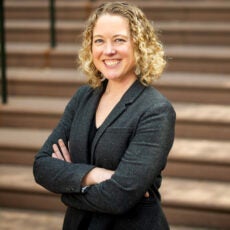
Sanya Carley
Mark Alan Hughes Faculty DirectorSanya Carley is the Faculty Director of the Kleinman Center. She is also Vice Provost for Climate Science, Policy, and Action at Penn and Presidential Distinguished Professor of Energy Policy and City Planning at the Stuart Weitzman School of Design.

David Konisky
Associate Dean for Research, Paul H. O’Neill School of Public and Environmental Affairs at Indiana UniversityDavid Konisky is the Associate Dean for Research and a Lynton K. Caldwell Professor at the Paul H. O’Neill School of Public and Environmental Affairs at Indiana University. He also co-directs the Energy Justice Lab and serves as editor-in-chief for the journal Environmental Politics.
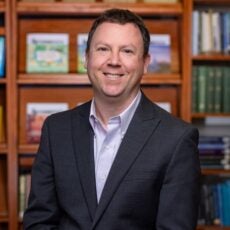
Daniel Raimi
Fellow, Resources for the FutureDaniel Raimi is a fellow at Resources for the Future and a lecturer at the Gerald R. Ford School of Public Policy at the University of Michigan. He works on a range of energy policy issues with a focus an equitable energy transition and directs RFF’s Equity in the Energy Transition Initiative.