The Climate Emergency Inside Hospitals
Healthcare systems must decarbonize while building the energy resilience necessary to protect patients during climate disasters, a dual imperative supported by new federal "direct pay" incentives.
Hospitals are sanctuaries of care, but they are also among society’s most energy-intensive institutions. In the United States, the healthcare system accounts for 8.5% of all greenhouse gas emissions. Hospital operations–specifically scope 1 and 2 emissions–make up roughly one-third of that footprint. Operating rooms must be kept at precise temperatures, ventilation systems must sterilize the air around-the-clock, and heavy machinery like MRI scanners draw enormous loads of electricity–one scan alone can consume the daily power of an average American home.
However, the broader challenge lies in the supply chain. Only about 20% of the sector’s emissions come directly from on-site energy use, while the remaining 80% are scope 3 emissions embedded in the manufacturing, transportation, and disposal of everything from syringes to surgical gowns.
A common criticism often emerges in healthcare sustainability discussions: Hospitals have a duty to protect patients, and that should be the only priority when selecting materials like anesthetics or energy sources. While patient safety is indeed the primary mandate, the “do no harm” principle now requires looking beyond the hospital walls.
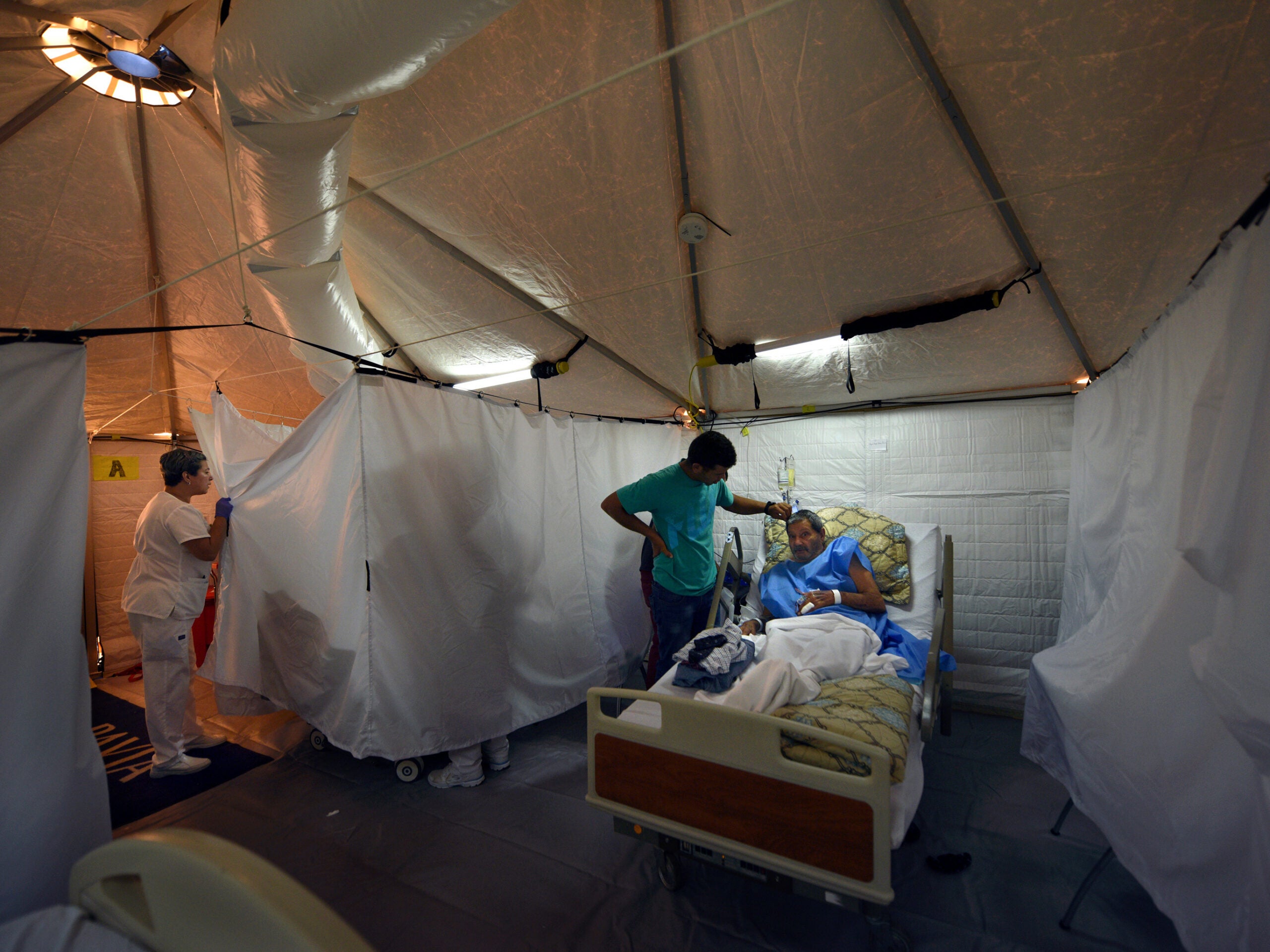
Energy resilience and decarbonization are not competing goals; they are two sides of the same coin. The growing frequency of severe storms and wildfires has exposed how fragile our dependence on centralized, fossil-fuel-heavy grids can be. After Hurricane Maria struck Puerto Rico in 2017, hospitals were forced to run on diesel generators for months, leaving critical care units vulnerable during fuel shortages. Similar scenes played out during California’s wildfires and the 2021 Texas winter freeze. These crises revealed that building energy resilience through on-site renewables and microgrids is a direct investment in patient safety.
A growing number of health systems are proving that these imperatives go hand-in-hand. Kaiser Permanente became the first carbon-neutral health system in the U.S. by investing in renewable energy contracts and on-site solar. Gundersen Health in Wisconsin generates more energy than it consumes via biogas and wind. Montefiore Medical Center in New York uses microgrids and battery storage to “island” itself from the grid during outages, ensuring lifesaving equipment stays powered when the local infrastructure fails.
In recent years, federal policy has accelerated these transformations. A key catalyst has been the Inflation Reduction Act (IRA) of 2022, specifically its “direct pay” provision. This allowed non-profit hospitals to receive cash refunds for clean-energy tax credits, making solar panels and geothermal systems financially viable for institutions operating on narrow margins. By 2026, these programs will have demonstrated remarkable durability. Despite shifts in the political landscape, these incentives have survived due to their bipartisan appeal: they reduce operational costs for local employers and increase the reliability of community infrastructure during disasters. This survival highlights a pragmatic recognition that a resilient hospital is also a more secure hospital.
Finally, hospitals are discovering that their purchasing power is one of their most effective tools for climate action. By forming strategic purchasing consortia, hospitals can leverage their combined scale to demand innovations that an individual facility could never mandate on its own.
A primary target of this shift is the elimination of high-impact greenhouse gases, such as low-emission anesthetics. A transition away from gases like desflurane, which has a global warming potential thousands of times higher than CO2 per unit mass, is being achieved without any loss in care quality. Similarly, by prioritizing renewable-powered medical devices and sustainable packaging, hospitals are forcing manufacturers to decarbonize their own operations to remain competitive.
Ultimately, energy resilience and climate responsibility are not competing goals. As health systems confront the intertwined crises of climate change and public health, they can embody a broader kind of healing that protects the patient in the bed while simultaneously protecting the planet they call home.

Claire Zhang
Undergraduate Seminar FellowClaire Zhang is a fourth-year student in the VIPER dual-degree program pursuing majors in bioengineering and biology. Zhang is also a 2025 Undergraduate Student Fellow.