Watch the recording.
Should Companies Write Their Own Climate Rules?
Event Summary
Corporate climate pledges gained worldwide attention in the early 2020s as a wave of companies set net-zero targets that were aligned, at least on paper, with the long-term goals of the United Nations Paris Agreement. Even now, as many companies and countries pull back from ambitious climate action, the voluntary standard-setting regime keeps moving forward.
This talk looks at the history of corporate climate pledges and their associated voluntary standards, as well as a recent campaign to consolidate standard-setting processes with the goal of codifying low-ambition outcomes as consistent with global climate mitigation. Although scholarship identifies benefits and shortcomings of voluntary climate action, the governance of voluntary standards is fundamentally unbalanced and broken.
Processes that were initially conceived of as partnerships between companies and civil society have reverted to nearly full corporate control. Better governance and science-based accounting rules can help, but reform will not be simple. That said, dismissing corporate climate governance as a distraction from real climate action risks establishing problematic precedents that can and will be adopted into legally binding climate regimes around the world.
Lunch will be available following the talk.
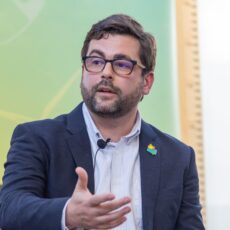
Danny Cullenward
Shleifer Senior FellowDanny Cullenward is a Shleifer Senior Fellow at the Kleinman Center. He is an economist and lawyer focused on the scientific integrity of climate policy.

Eric Orts
Guardsmark Professor, Wharton SchoolEric W. Orts is the Guardsmark Professor at the Wharton School of the University of Pennsylvania. He is a full professor in the Legal Studies & Business Ethics Department with a secondary appointment in Management. Prior to joining Wharton’s faculty, he practiced law at Paul Weiss in New York City.